Scope of Work (SOW)
Generator
What they're saying about us

This podcast is a game-changer! The episodes are packed with actionable insights, and the hosts really know how to keep you engaged. I feel like I’m constantly learning something new.
We’ve been recommending Transistor to everyone we know who’s interested in starting a podcast.

I’ve learned so much from this podcast! Whether it’s business, personal growth, or just having fun, every episode feels like time well spent. The perfect blend of entertainment and knowledge. The hosts make complex topics easy.

I’ve been listening since day one, and it just keeps getting better! The production quality is top-notch, and I always walk away with fresh perspectives.
This podcast has transformed my mornings. The hosts dive deep into topics I care about and offer insights I can apply in my life right away. Highly recommend!
After testing out 20+ podcast hosting platforms and working with numerous clients setting up their hosting, Transistor.FM is the one I always recommend because of its unique features, accessibility and user interface.
After testing out 20+ podcast hosting platforms and working with numerous clients setting up their hosting, Transistor.FM is the one I always recommend because of its unique features, accessibility and user interface.
When people ask me which podcast host I recommend, I say: 'Transistor is 100% the way to go.
I’ve been listening since day one, and it just keeps getting better! The production quality is top-notch, and I always walk away with fresh perspectives.

A scope of work is the document that prevents the two most common problems in client work: the client expecting more than was agreed to, and the provider delivering less than was promised. Every freelancer, consultant, and agency has a horror story about a project that went sideways because the scope was never clearly defined. The scope of work exists to make sure that story does not happen again.
This free scope of work template generator creates a professional, properly structured SOW document in minutes. Fill in your project details, deliverables, pricing, and terms. Copy it as HTML for proposals and websites, or as plain text for emails and documents.
How the scope of work template generator works
Enter your project name, client name, provider name, and start and end dates. Write a project description that explains what the engagement is about. Add your objectives, then define each deliverable with a name, description, frequency, and responsible party. Specify what is explicitly out of scope so there is no ambiguity about what is and is not included. Add your pricing, payment terms, and any additional terms like termination clauses or IP ownership.
The generator produces a formatted scope of work document with a professional header, structured sections, numbered deliverables, a pricing summary, and signature lines for both parties. Copy it as HTML or plain text and use it immediately.
What is a scope of work
A scope of work is a document that defines the boundaries of a project or engagement. It answers five questions: what work will be done, who will do it, when it will be completed, what it will cost, and what is not included. A good scope of work leaves no room for ambiguity about any of these questions.
A scope of work is not a contract, although it is often attached to one. The contract covers the legal terms likeliability, confidentiality, and dispute resolution.
The scope of work covers the operational terms like what gets delivered, when, and by whom. Together they form the complete agreement between client and provider.
What should a scope of work include
Every scope of work should include a project description that explains the engagement at a high level, measurable objectives that define what success looks like, a detailed list of deliverables with specifications and timelines, a clear statement of what is out of scope, pricing and payment terms, and a timeline with start and end dates.
The deliverables section is the most important part. Each deliverable should be specific enough that both parties would agree on whether it was completed. "Content strategy support" is too vague. "15 SEO-optimized blog articles per week, each 1,200 to 1,800 words, with meta descriptions, internal links, and FAQ schema markup" is specific enough to evaluate objectively.
Why the out of scope section matters
The out of scope section is the most overlooked and most valuable part of any scope of work. Without it, clients will naturally assume that anything related to the project is included. If you are hired to write blog content, the client may assume you are also managing their social media, setting up their email campaigns, and redesigning their website. The out of scope section prevents this by explicitly stating what the engagement does not include.
Be specific. Do not write "anything not listed above is out of scope." Instead, list the specific things clients commonly assume are included but are not. If you are providing content strategy, explicitly exclude paid advertising management, website development, CRM setup, and social media account management. The more specific your exclusions, the fewer uncomfortable conversations you will have later.
Scope of work vs proposal vs contract
A proposal is a sales document. It makes the case for why the client should hire you, what results they can expect, and what the investment looks like. Its goal is to win the business.
A scope of work is an operational document. It defines exactly what will be delivered once the business is won. Its goal is to set clear expectations so the project runs smoothly.
A contract is a legal document. It covers liability, confidentiality, intellectual property, termination, and dispute resolution. Its goal is to protect both parties.
Many consultants and agencies combine all three into one document, which is fine for simple engagements. For larger projects, keeping them separate ensures each document does its job without becoming unwieldy.
How to prevent scope creep
Scope creep is what happens when additional work gets added to a project without adjusting the timeline, budget, or deliverables. It is the most common source of frustration in client services. A clear scope of work is your first line of defense.
When a client requests something outside the agreed scope, you do not say no. You say "that is outside the current scope. I can absolutely do it. Here is what it would cost and how it would affect the timeline." This turns a potential conflict into a professional conversation about trade-offs. The scope of work gives you the reference document to point to.
Build a change request process into your engagement from the beginning. When both parties know that scope changes are handled through a simple, documented process, they stop feeling like confrontations and start feeling like normal business operations.
Common scope of work mistakes
The most common mistake is being too vague about deliverables. Every deliverable should have a clear definition of done. If someone could reasonably disagree about whether a deliverable was completed, the specification is not detailed enough.
The second mistake is omitting the out of scope section. This is the section that prevents scope creep, yet most scope of work templates leave it out entirely. Always include it, and make it specific.
The third mistake is not specifying what the client is responsible for. Most projects require input from the client — content approvals, brand assets, access to tools, feedback within a certain timeframe. If the client's responsibilities are not documented, delays on their end will create delays on yours with no accountability.
The fourth mistake is not including a timeline for feedback and approvals. If a deliverable requires client review, specify how many business days they have to respond. Without this, a project that should take three months can stretch to six because every deliverable sits in someone's inbox for two weeks.
Who this tool is for
This scope of work template generator is built for freelancers, consultants, agencies, and anyone who does client work and needs a professional SOW document without starting from a blank page. Enter your project details, define your deliverables, and have a polished scope of work ready to send in minutes.
Pipes Before Chocolate
How to build an AI-augmented go-to-market engine with a skeleton crew, content, sales outbound, inbound, ABM, and thought leadership, without a 15-person team or a six-figure tool budget.
Download for Free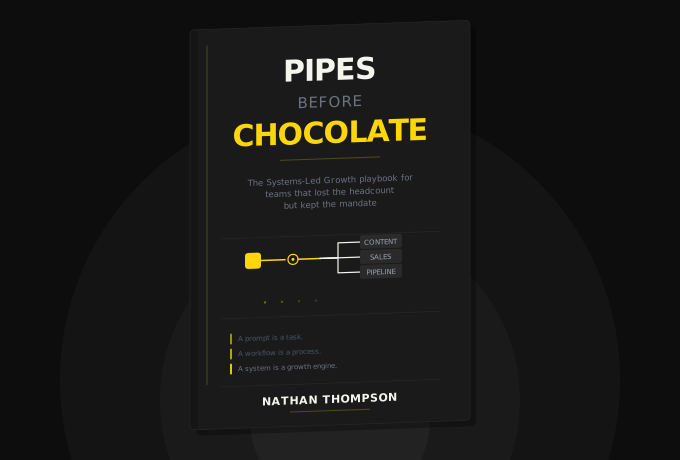

Frequently Asked Questions
A weekly podcast where real SaaS operators share the AI workflows they've built to survive skeleton-crew life. No thought leadership or sponsored hot takes. My goal in each episode is to focus on what's actually working.
Get notified every time we post an new episode
Lorem ipsum dolor sit amet, consectetur adipiscing elit.